 August
21
August
21
Tags
Token Bundle Show
Melbourne Now Reboot:
A Token Bundle Show @Chadstone by the Yarra
There is that saying: never have a first-rate row over a second-rate exhibition, but with the second iteration of the NGV’s Melbourne Now, it’s difficult not to. A bundle of local talent exhibited within a parochial framework, Melbourne Now is devoid of clear curatorial vision. Victim of its own hyper-inflated ambitions, the show tries to do too much. It is impossible to snapshot the creative scene in a city the size of Melbourne,(which has quietly overtaken Sydney to become ‘Australia’s’ largest). This is exactly what Melbourne Now lays claim to and from shaky foundations, another institutional trend emerges: the rise and rise of the ‘curatorium’. This is when a team of curators share the burden of choosing who is ‘in’ Melbourne Now and, by default, who isn’t. The curatorium results in an exhibition with a plethora of undulating sub-themes failing to anchor, making it a rambling mish-mash of busy incoherence with a few memorable moments. The message is, that if you bundle 200 + local artists, designers, and architects into the one show once every ten years, en mass and in a package deal, it will almost be as exciting as the next French Impressionist Winter Masterpiece Blockbuster!
According to their own public relations spin, The National Gallery of Victoria is Australia’s most beloved art museum. Art Museums used to be a welcome reprieve from the pressures of consumerism and consumption but living up to its nickname ‘Chadstone by the Yarra’, the NGV is increasingly looking, sounding, and advertising just like a shopping centre. Functioning as a city sales showroom for the upselling of luxury to a proletariat audience, (like a gold class movie ticket to the local multiplex), the NGV partners with many of the same multi-national corporations as Chadstone. Co-branding sponsorship deals accompany every exhibition. The NGV do business with the world’s two leading luxury brands LVMH and Kering Group, as well as David Jones, Mercedes Benz, Uniqlo and Mimco. A corresponding line of merchandise drops to coincide with every exhibition: T-shirts, tote bags, caps, socks, bookmarks, and postcards available at every customer price point.
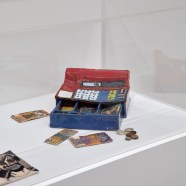
Lisa Reid (born in ‘Australia’ in 1975) is an accomplished ceramicist working with Arts Project Australia and a star of Melbourne Now. Exhibiting a suite of meticulously crafted and glazed objects that puncture through the zeitgeist, Reid imbues familiar consumer products with a poetic eye for detail. The old-fashioned cash register with the old paper dollar notes and coins (2018 Glazed earthenware) memorializes a system of payment all but relegated to a recent past, the transition to a cashless society gaining momentum through the Covid era. Reid’s objects are imbued with a beguiling eye for detail, a 1950’s vintage Sunbeam electrical hairdryer (2022) is exquisitely rendered, its pink lined encasing conjuring just one of the beauty essentials from a bygone era. The beauty industry is a rapidly expanding market, recently tapping into the commercial potential of mental health self-care regimes andmarkets. Evidently when we’re feeling good, we’re also looking good.
Kenny Pittock also produces a range of meticulously crafted ceramic replicas. Replicating the handwriting styles of shoppers and newly home-schooled students, 52 shopping lists is a poignant collection assembled while the artist worked collecting supermarket trolleys during Melbourne’s extended Covid lockdowns. Here, the weekly shop became an outing to look forward to, and home meal preparation an activity of renewed energy, focus and comfort. 52 shopping lists sites the supermarket as a political minefield: an ‘essential service’ and site where supply chain, inflationary pressures, price rises and the super profits enjoyed by the major supermarket chains all play out. The romantic notion of the starving artist working a day job to financially support themselves, even when their works are exhibited in and collected by major museums, is a reminder that it is the precarious labour of artists as primary producers that supports the ever-expanding creative industry professionals. The percentage of the budget of arts organisations that is paid to artists (not to fabricate works, but as a wage) remains undisclosed. Artists and makers indirectly pay for the extravagant excesses of the sector.
The inaugural iteration of Melbourne Now back in 2013 heralded in the new guard at the NGV coinciding with the arrival of Director Tony Elwood and his touring Captain’s picked team of key Executive Management. Deputy Director Andrew Clark, Don Heron, Assistant Director Exhibitions Management and Design, and his wife Kate Ryan, Curator, Children’s program, all migrated south together from Queensland Art Gallery. Elwood’s partner Tom Mosby was appointed CEO of the Koorie Heritage Trust, also at Federation Square shortly after.
The Elwood era is popular with governments still fixated on the idea that humans program life’s ‘Major Events’. Major Events enjoy major budgets and are a broad umbrella including events like the Grand Prix, the Australian Open Tennis tournament, all the Codes of Football and the Blockbuster art exhibitions that attract corporate sponsors to ‘exclusive’ events with fly in fly out audiences. Working at the intersection of what is and what isn’t art, the NGV delivers a populist and spectacle- based smorgasbord of exhibitions that routinely foreground international art stars over local makers and design, particularly fashion and architecture over art. Ticket sales and attendance figures reign supreme, the bronze statues just keep getting bigger and the Instagram algorithm could well be determining programming.
There is increasing criticism of the NGV’s relentless churn of blockbuster and media launch, of spin and of soundbite. The NGV’s remorseless addiction to the excesses of commerce and consumption are taking on a patina of the old and dated ‘crazy years’ of the Roaring Twenties, right before the crash. All-too-frequent colloquial comparisons to the great museums and collections of Paris, Berlin, New York, and London hark back to the days of the cultural cringe.
It is a truism within the creative industries that there is no money in art, but in the decade since NGV Director Tony Elwood was appointed, he has earned more than six million dollars (over half a million dollars each year, plus perks like travel). Even when the gallery was shuttered, Elwood was paid more than the Premier of Victoria. For this fee Elwood is tasked with helping enshrine the doctrine that Melbourne is Australia’s cultural capital. Also routinely claiming to be the shopping capital of Australia, and the sporting capital, all-in-all Melbourne is a great place for a weekend away and the state funded advertising budget encourages the rest of Australia to forget the carbon miles and come visit.
What is a Bundle Show?
Bundling is a retail value pricing strategy that attempts to add value, and generate interest and attention, by lumping a great many different items together and marketing them as a package. Bundles are typically offered at discounts to stimulate demand and are a way to sell products or services that are otherwise difficult to showcase or offload. Bundling is a common feature in imperfectly competitive product and service markets of which art museums surely qualify.
A bundle show is seldom more than the sum of its parts and the economies of scale, production and hype routinely overwhelm and confound. Another problem with sprawling, all-encompassing institutional token gestures is they divide community. If an artist, architect, or designer is not included in the overview, it can be a disempowering experience. Many an artist’s greatest fear is of being overlooked and undervalued. Of failing to attract an audience. And it is this access to audience that the NGV offers, that attracts artists. When an abundance of talented artists with healthy creative egos compete for scarce opportunity, attention and budget, there is heightened potential for trouble.
Exhibiting artists ‘lucky’ and ‘grateful’ to be curated into the bundle show, rally for institutional favour on several fronts: competing for budget, space, the right equipment, institutional framing and access to media. Gallery positioning is key and ranges from dedicated space in prime locale on the ground floor to work installed on a landing, audiences busy riding the escalator up to the next floor too preoccupied to ponder the nuance of a video. Art installed in a hallway will not command the same attention as in a gallery.
Budget wise, exhibiting artists individually negotiate their own slice of the unknown budgetary pie. It is clear which artists have been afforded the bigger budgets and which artists have not. Commissioned works might be purchased for the gallery’s permanent collection, or the promise of such might be used to justify extraordinarily low artists fees. There is little rhyme nor reason to outcomes for artists, that range from $30 000 budgets to $3000 and the promise of acquisition that never eventuates. Only ‘key’ artists are invited by the NGV to meet the press.
The opposite of the Bundle Show (remit vast, remit too broad and sliding toward futility, timing infrequent and budget miniscule compared to big ticket International Exhibitions) is the ‘Blockbuster’ Shows the NGV get super excited about and continue to program with persistent regularity, typically of artists from North America or Europe. Picasso, Degas, Bonnard, Jean Paul Gaultier, Alexander McQueen, Andy Warhol, Keith Haring, David Shrigley, Jean Michel Basquiat, KAWS.
Boonwurrung Elder N’arweet Dr Carolyn Briggs AM (born 1949), and Sarah Lynn Rees (Palawa born 1990) collaborate on Gathering Space: Ngargee Djeembana. Reminiscent of the topology of the built environment and of public space, an array of stools and seats are assembled, the physical materiality of every component is meticulously researched, traced and annotated: ‘Kangaroo Leather supplied by AusTANNERS, Glass, Sand sourced from Lang Lang Supplied by Oceania Glass Dandenong’. Opening a window so we might pause and consider what we use and where the 55 materials in the installation have been sourced from, the work is a type of mapping of country. ‘Water: Water from Yarra Catchment: Sourced from tap’.
The lion’s share of exhibits speaks more to insatiable consumption than sustainability. The difference between ‘art’ and ‘design’ remains a hotly contested topic for debate. There is irrefutable evidence that of the two disciplines design is winning. Some have noted that every week is Design Week in Melbourne. The rise and rise of the NGV Design department, particularly the strata of fashion and architecture, (the beloved hobbies of the wealthy donor/patron class), continues unabetted. The Design Wall (popular from Melbourne Now ten years ago) gets a reboot. In a society awash with products there’s always room for a new and/orimproved one to meet every occasion. Displayed in multiples, a scaffold of local designs engulfs viewers. So much stuff, there is stuff everywhere. ‘Design the world you want’ hail the design aficionados optimistically, denying that bespoke landfill is landfill non-the-less.
Nothing shouts rising inequality like a state funded cultural fixation on dream home builds and wardrobes of bespoke couture. Even for audiences of students from ever- more-expensive tertiary courses, or casualized workers in a housing affordability crisis, it is important to aspire. Allocated the best exhibition spaces, there is an uncanny umbrella of ‘sales showroom’ hanging over much of Melbourne Now. Taking its cues from the pages of The Design Files, exhibition design leans heavily into diorama, situating art within the domestic luxury lifestyle of success. Property is the greatest source of social power and we live in a society culturally obsessed with it.
Like tableaux from Milan Design week, ‘No house style’ (curated by Timothy Moore and Simone Leamon) greets us in the ground floor foyer. Large format photographs of local residential architecture play backdrop to a hand-crafted chair, maybe a lamp, matched and carefully arranged on elevated platforms reminiscent of the window display from a high-end furniture store. On an information panel we read: ‘No house style dominates contemporary furniture and residential architecture in Melbourne. This pluralism exists alongside a growing appreciation of contemporary design alongside the accumulation of wealth for some homeowners. It’s also seen architects and designers rise to the challenge to provide quality affordable housing and furniture design.’
Quality affordable housing stock has most definitely not kept abreast of demand. Bespoke wallpaper, always on the NGV playlist, puts the NGV’s infamously expensive big printer to work, rumoured to have cost a hefty 1 million dollars. Artworks that are overlaid read as a domestic prop. This wouldn’t necessarily be bad unless you see it at every show. As if plucked from the pages of Better Homes and Gardens, art is relegated the function of decorating the home of a life well lived.
A cultural preoccupation with architecture and ‘Big Builds’ is the backdrop to ‘A Score for Fed Square’ 2023 by Mia Salsjo, curated by Kat Prugger. Part of an ongoing series of cerebral, process-heavy works in which Salsjo interprets architecture into original musical scores, her sonic response is as complex and multi-faceted as the building’s facade. Engaging with avant-garde traditions of original orchestral composition, Salsjo combines her twin passions for architecture and music, creating a work of startling originality. She asks a simple but profound question: what might Federation Square sound like?
Salsjo annotates and maps the mathematics and engineering within the architectural plans as designed by Donald Bates and Peter Davidson for Bates Smart, for Lab Architecture Studio. Federation Square is not an easy exhibition space, the post- modern design is more like an over accessorized outfit than a blank, white cube. The myriad architectural angles, finishes and textures compete against some artworks. Atriums and vestibules are not spaces that readily serve most artworks, but when interpreted into music, they work.
In the gallery an immersive installation of the working drawings includes a recording of the score which can be heard from a series of speakers hanging overhead.
Salsjo is an artist who experiences the world as much through her ears as her eyes. Noting the similarities between the look of architectural plans and musical notation, Salsjo follows an intensely personal process of research and translation using archival photos, the spreads of dots and lines first become a series of intense drawings. Noting the buildings strengths and vulnerabilities, two live performances of the score were realised in collaboration with MSO conductor Carlo Antonioli Cybec and ten instrumental players also from the Melbourne Symphony Orchestra, with orchestrator Mark Buys. There was a performance on Federation Square’s outdoor stage and another inside ‘Community Hall’, the pop-up performance space built to accommodate Melbourne Now’s performance and talk program. ‘I don’t know what my work will sound like. I live to find out.’
Kait James (Wadawurrung born 1977) is an artist garnering acclaim for her dissident kitsch works subverting ‘Australiana’ tea towels. For Melbourne Now she scales up, reimagining the iconic British band The KLF (Kopyright Liberation Front) into the ‘Koori Liberation Front’. Using sampling and riff techniques ubiquitous with music production of that time, James produces a triptych of intensely coloured soft wall sculptures. Rug tufting, collage and embroidery techniques are imbued with political resonance. The words ‘Justified and Ancient’, from KLF’s early 90’s hit dance track (featuring lead vocals by country music star Tammy Wynette) becomes the ‘Unjustified’ and ‘Ancient’ reality of Aboriginal nations under British colonialism. James references the ice cream van broadcast from the band’s MTV video clip. The subtitle of the work ‘Stand by the JAMs’ references Wynette’s signature anthem ‘Stand by Your Man’.
The ‘In Memoriam’ section, curated by Amita Kirpalani, is an homage to four highly regarded artists whose lives and works inspire local makers and whose contributions to local community are each immeasurable. Damiano Bertoli (1969-2021), Kate Daw (1965-2020), Virginia Fraser (1947-2021) and John Nixon (1949-2020) were each prolific in output and influence. Impacting across the fields of education, curating, research, writing and thinking about art, the works on exhibition are selected fromamongst their most recent. This is the tear-jerker part of the exhibition, imbued with such recent loss. Daw’s last series, Love, Work (prelude, aftermath, everyday) alludes to a dedication to the daily practice of many artists. A suite of four of Bertoli’s large inkjet print Superposition works, numbers #3, #6, #5 and #7, form an achingly beautiful collection of poetic images, inspired by cultural moments from the year of his birth and produced in 2019. To look at these works is to experience the heartache of what might have come next. It is difficult to imagine a Melbourne art scene without the hard-edged abstractions of John Nixon and recognise his influence on generations of art students. Virginia Fraser was the long-term collaborator of Kuku/Erub/Mer contemporary artist Destiny Deacon. Together they collaborated to produce and exhibit incredibly powerful video and installation works. An expert in the history of Australian women in film, Fraser also wrote extensively about the patriarchal construct and with Elvis Richardson, produced six covers for a fictional periodical magazine called FEMMO, exhibited here in the ground floor gallery windows.
Stacks of free posters, The Melbourne Now broadsheet (a collaboration between the NGV Publications and Graphic Design Departments and learning partner Deakin University) is a real highlight. The publication includes a specifically designed new typeface ‘Rodney’ by Dennis Granuel. The Melbourne based writers commissioned for the broadsheet achieve a cohesion largely missing from the exhibition. Tony Birch, (author of novels The White Girl, Ghost River and Blood) describes the Aboriginal activism, resistance and resilience to ongoing colonialism in the must-read essay Always. Writer Emily Bitto pieces together headlines published between 2013 and 2023 in the once great masthead The Age. Juxtaposed with personal journalentries, the collage makes for an emotional read: ‘I don’t feel pressure to marry or have children; the overwhelming pressure is to consent to capitalism: to consume, acquire, go into debt, make work the centre of one’s life, buy property.’ Property becomes omnipresent as is violence and rising inequity.
The NGV’s intention with Melbourne Now was to spotlight local makers. Good intentions fail just as easily as bad ones. It has contextualized the ensuing mass through a remit so broad as to be meaningless. Melbourne Now purports to solve the problem time-poor audiences have navigating engagement with the vibrant local arts scene, offering order and simplicity to the confusing, tedious choices of what shows to see, and when and where these shows are. The exhibition thus becomes a one- stop-shop for audiences to engage with the local, when that box is ticked its back to business as usual. Part of the trend where Museum’s program shows to run for longer durations, Melbourne Now runs for just short of six months (from 24 March-20 Aug 2023). Longer shows means fewer shows and increases pressures not only to be included, but to shine if you are granted the opportunity.
To be Bundled is to be pushed, carried or sent forcibly, unceremoniously and hastily, somewhere that you might not want to go. In bundle deals there will be options, goods or services the consumer has no use for. By the end of any visit to Melbourne Now the overwhelming sentiments are of confusion and lethargy. The exhibition tries too hard to be everything for everyone. Trying to do too much is a rookie mistake.
Nat Thomas is a Melbourne based artist and writer.
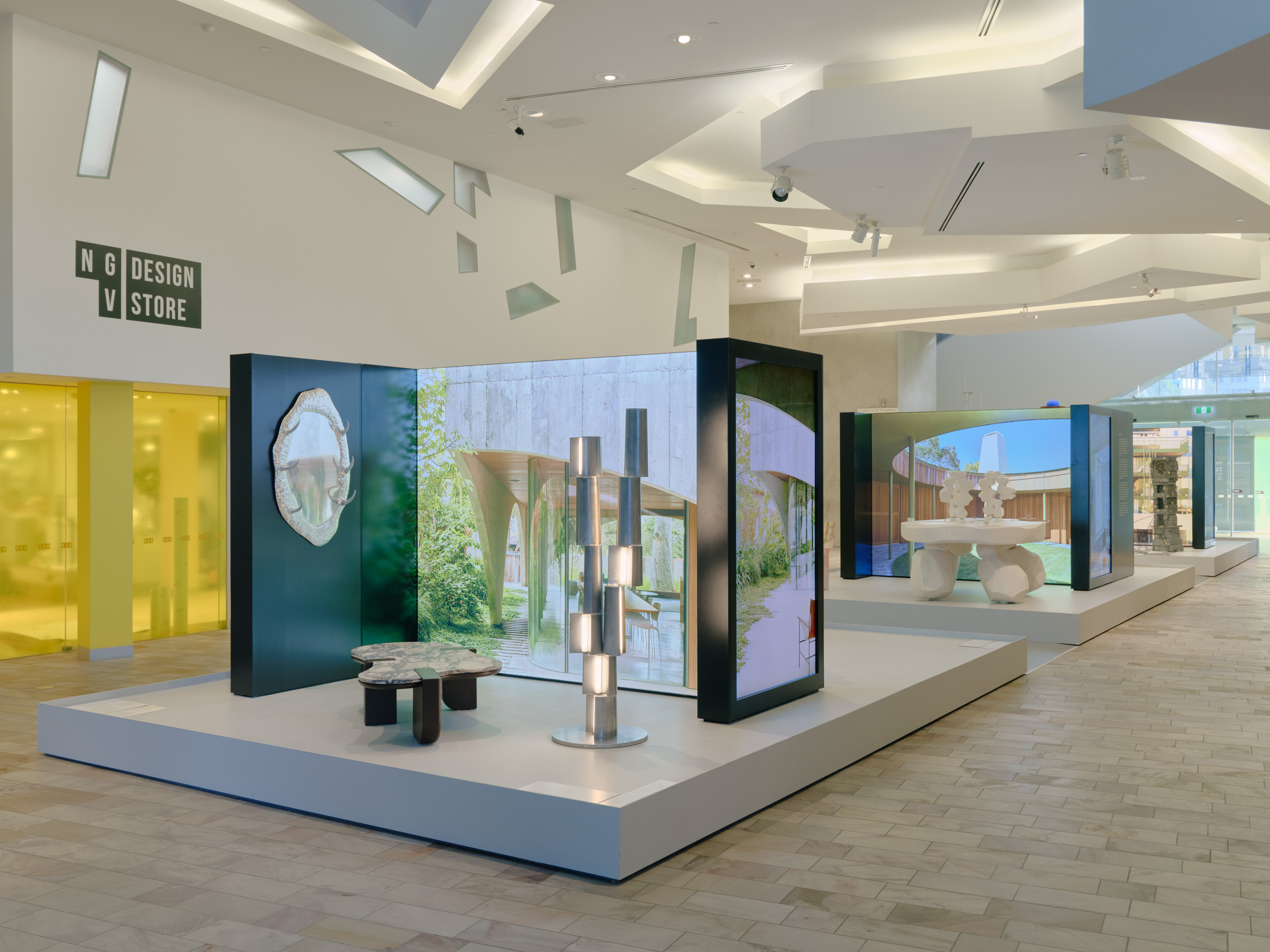
No House Style..

Mia Salsjo: Melbourne Now – Sean Fennessy
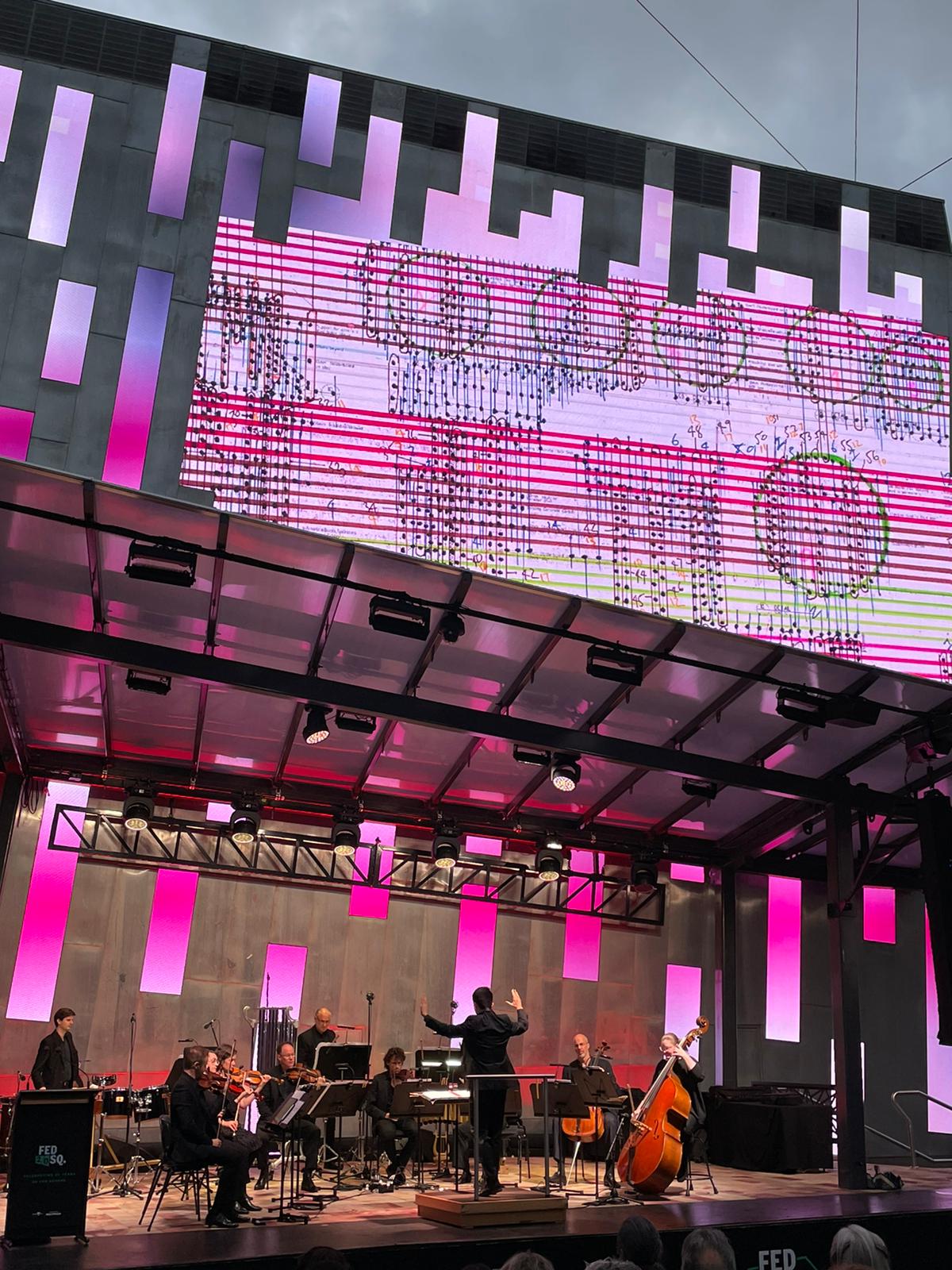
MIa Salsjo Performance
MSO Federation Square – Melbourne Now
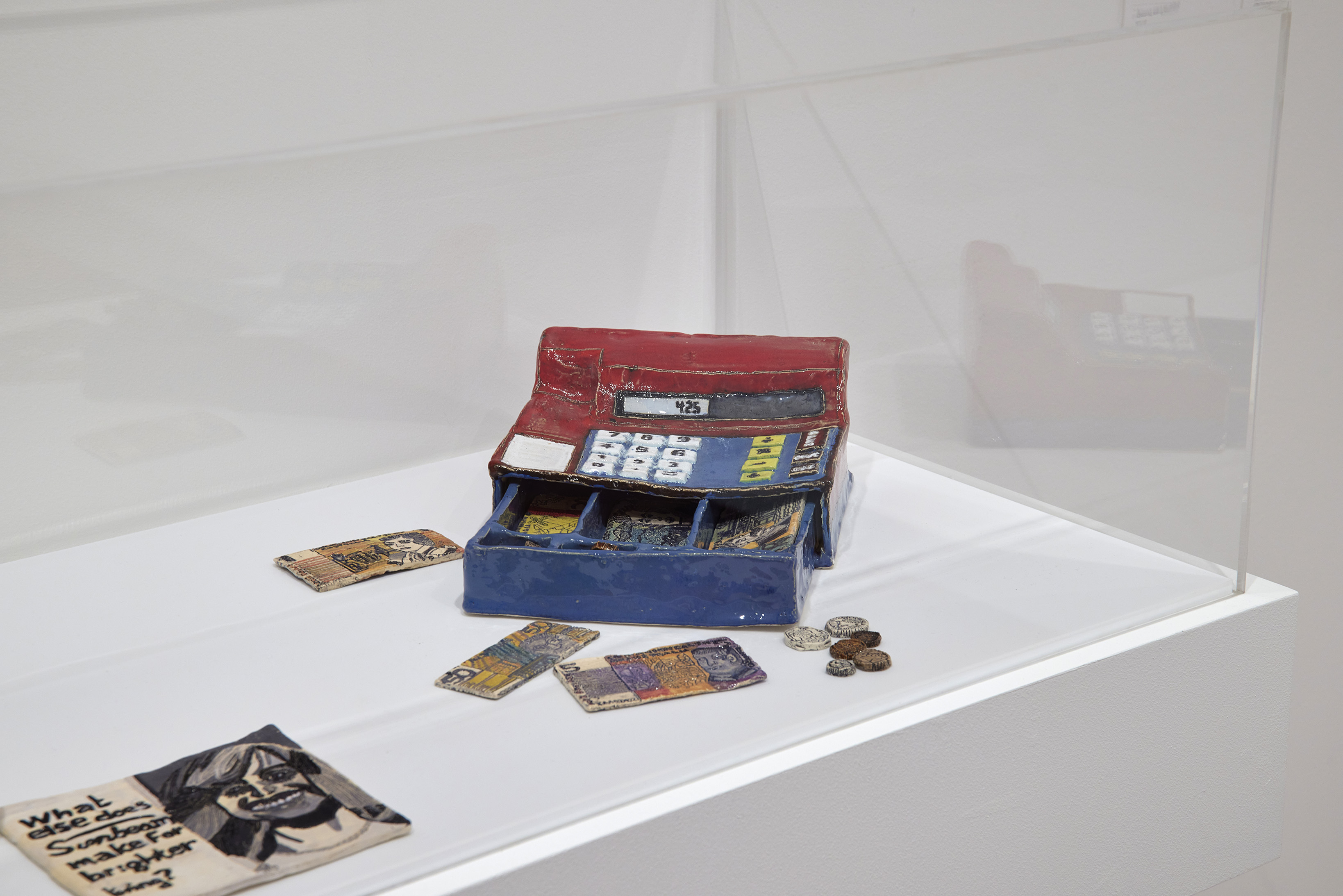
Lisa Reid – Cash
Melbourne Now – Sean Fennessy

Kenny Pittock: Melbourne Now – Sean Fennessy
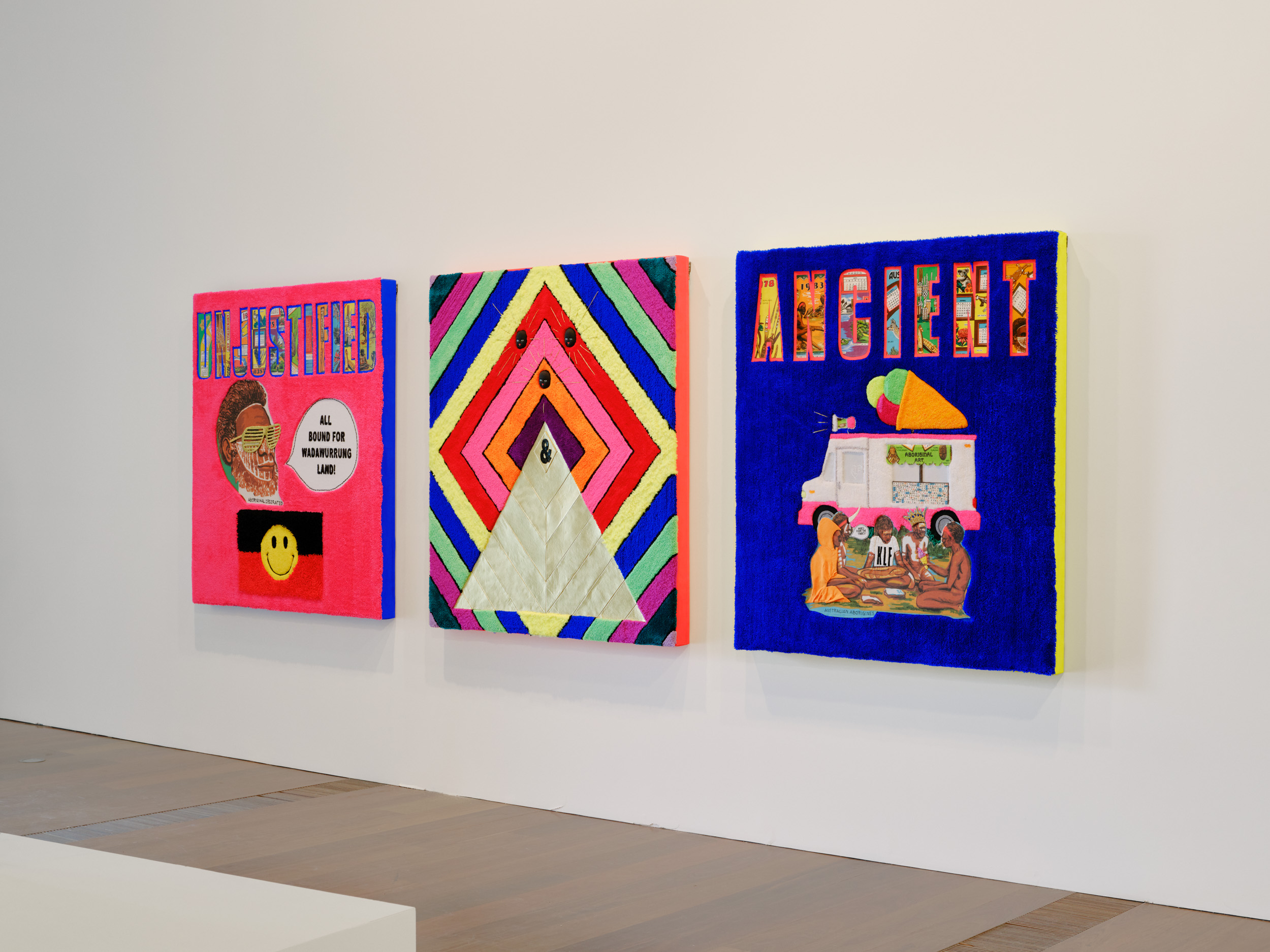
Kait James: Melbourne Now

Lisa Reid – Sunbeam
Melbourne Now
 nattysolo